
'While Indian markets are indeed not inexpensive, the valuations of largecap stocks are still a considerable distance from being overstretched.'

Jefferies has identified 11 stocks set to benefit from long-term macro trends like capital expenditures, government manufacturing initiatives, and financialisation.

For the third month running, investors opened over four million new demat accounts in February, showing growing household confidence in stock markets and their increased risk appetite. Over 13.12 million new demat accounts have been opened in the last three months, taking the total count close to the 150-million mark. Demat accounts are needed for trading and holding shares electronically.

Equity fundraising through qualified institutional placements (QIPs) has gained traction, thanks to supportive equity markets and the need for fresh fundraising to meet capital expenditure (capex) requirements.

It's not only the Indian markets that command a valuation premium over their global peers; shares of subsidiaries of India-listed multinational companies (MNCs) also trade at rich valuations compared to their parent companies. An analysis of 12-month forward price-to-earnings (P/E) and price-to-book (P/B) multiples of domestically listed MNCs shows that most quotes have a premium ranging from 2.1x to 6x that of their parent. Similarly, P/B, in most cases, is significantly higher in the domestic market.

'Historically, the markets tend to perform well during election years as governments aim to increase spending and call attention to growth.'

South Korean auto giant Hyundai Motor Company is considering tax implications of listing its Indian unit before taking a final call, according to sources privy to the development. Hyundai Motor is mulling an initial public offering (IPO) for its Indian arm to raise around $3 billion (at a valuation of up to $30 billion), and talks are in the early stages between the company and bankers, banking sources revealed. Hyundai Motor India Ltd (HMIL), however, declined to comment on the development.

Asia Securities Industry & Financial Markets Association (Asifma) has raised concerns about the Securities and Exchange Board of India (Sebi) proposal to introduce a T+0 settlement cycle. The industry association of top foreign portfolio investors (FPIs) has stated that this move could give rise to several issues, including the bifurcation of the market, liquidity fragmentation, and deterioration of market quality. In a discussion paper floated last month, Sebi has proposed a separate same-day settlement cycle that will run parallel to the existing T+1 cycle, where trades are settled the next day.
Foreign portfolio investors (FPIs) sold shares worth Rs 20,170 crore ($2.4 billion) recently. This marked the fifth-highest weekly outflow from overseas funds since the beginning of 2008 and the largest since the last week of March 2020. Due to the Covid scare, FPIs had sold shares worth Rs 21,951 crore during that week, causing the market to decline by nearly 20 per cent.

India's first $1 trillion company by market capitalisation (mcap) is achievable by 2032 and HDFC Bank and Reliance Industries (RIL) are seen as lead contenders, ICICI Securities said in a note on Monday. To achieve this, the shares of both the firms will have to appreciate at least 20 per cent annually for the next decade. ICICI Securities believes this is possible if India's gross domestic product (GDP) growth accelerates to 9 per cent per annum and corporate profitability cycle peaks. "Our calculations suggest that India's first $1 trillion mcap stock could emerge by 2032.

Investors are reluctant to take long-term positions this year after the spectacular gains in 2023. The delivery-based trades on the National Stock Exchange (NSE) have declined to below 36 per cent this year from an average of 38.1 per cent in 2023. Investors tend to seek delivery for stocks where they see a long-term investment opportunity or tactical positional trade.
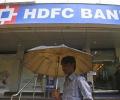
After the latest rout, the American depositary receipt (ADR) premium of HDFC Bank to its local shares has shrunk to nearly zero. Shares of HDFC Bank on Thursday fell 3.1 per cent to Rs 1,490, extending its two-day decline to 11 per cent. Meanwhile, the ADR has slumped over 15 per cent in the past two trading sessions.

As much as Rs 47,810 crore was spent on share buybacks by 48 companies in 2023 -- the highest amount since 2017. This surge in value was largely driven by a few large-sized issues, including those by Tata Consultancy Services (Rs 17,000 crore), Larsen & Toubro (Rs 10,000 crore), and Wipro (Rs 12,000 crore). In 2022, 58 companies had repurchased shares worth Rs 38,305 crore, according to data from Prime Database.

Hospital chain Aster DM Healthcare's plans to sell its Gulf business may run into rough weather with voting advisory firm Institutional Investor Advisory Services (IiAS) raising concerns over the transaction. Recommending an 'against' vote on the resolution, IiAS has said there is no clarity on how Aster DM will utilise the proceeds that it will obtain by selling the unit, which contributes to bulk of its revenues. In November, Aster DM had announced its plans to sell its wholly-owned subsidiary Affinity Holdings, which conducts business in the Gulf Cooperation Council (GCC) region, to Alpha GCC for $1 billion.

Foreign portfolio investors (FPIs) pumped in Rs 1.7 trillion into domestic stocks in 2023, one of the highest net inflows ever witnessed during a calendar year, of which 25 per cent went into the direct buying of stocks. Data provided by depository NSDL revealed that Rs 44,950 crore of the total FPI flows last year went into primary issuances. A large portion of the FPI investments through the stock exchange route went into block deals, thereby reducing the actual investments made via direct buying of stocks. Last year saw selldowns or block deals worth Rs 2 trillion.

Only the top 5 per cent profit makers account for 75 per cent of profits.

Eleven companies have launched their initial public offerings (IPOs) in December 2023, making this month the second-best December for public offerings since 1996. Collectively, they are raising Rs 8,182.7 crore this month. In December 2021, 11 companies raised Rs 9,534 crore. However, excluding December 2021, this month marks the best December for IPOs since 1996.

The benchmark Nifty and Sensex could see another 8-10 per cent from the current levels, said HDFC Securities in its outlook for equity markets in 2024. The brokerage said that the market movement in the next year will not be linear, and there will be more volatility. When asked about the market reaction to the General Elections in 2024, Dhiraj Relli, managing director and CEO of HDFC Securities, said more than the outcome of the elections, the market movement in the next three to four months will decide the market trajectory post elections.

A combination of strong earnings and economic growth, and hopes of the Federal Reserve ending the rate-hike cycle have pushed gross buying of Indian equities by foreign portfolio investors (IPO) to a new high. In 2023, FPIs have been gross buyers of shares worth Rs 25.5 trillion, the highest ever in a calendar year. FPIs also sold shares worth Rs 23.9 trillion. On a net basis, they were net buyers to the tune of Rs 1.6 trillion, the highest since 2020.

Going 'long' is becoming an overcrowded trade on Dalal Street, and any negative trigger could lead to a sharp correction, warn experts. However, given the strong momentum, particularly in IT stocks, the downside could be protected in the immediate term. "With the Nifty50 surging to new life-time highs, the bulls remain in control. Further upsides are likely once the immediate resistance of 21,492 is taken out.
